
Wine Professional Program
Our wine professional program is designed for certification-seeking individuals who are looking to solidify their foundational and/or advanced knowledge and skills while validating their existing wine and beverage capabilities. We apply a dynamic, learner-centered and teacher-directed approach to education which imparts a contemporary-driven, rigorous and accelerated programming of wine and beverage education.
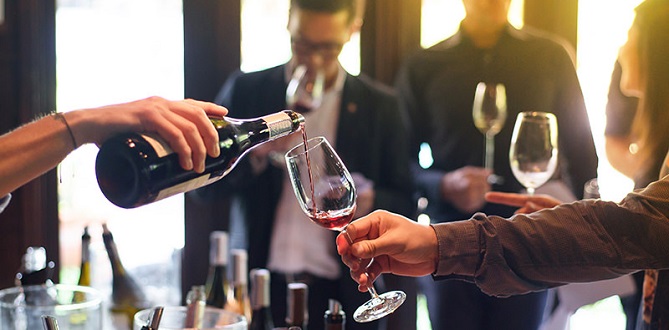
Sommelier Classes, Levels & Certifications
Participants are engaged in relevant content, including exercises and exhaustive tastings that challenge them to acquire a complex skill-set that they can put into practice. Included at each level is a food pairing component that expands the participants' knowledge and skills relative to pairing wine with food.
Individuals that should participate include:
- Wine enthusiasts, students and entry-level individuals starting out in the food and beverage industry
- Wine merchants, vendors, distributors, etc.
- Restaurant professionals (F&B directors, wine managers, sommeliers) who want to be sommelier certified
Courses
Foundation Level I -- Wine Apprentice
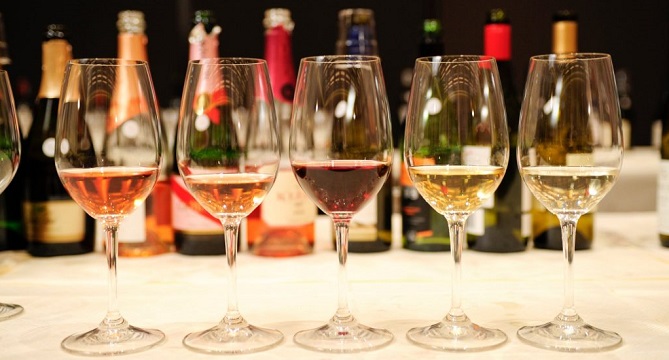
This foundational course navigates the learner through an intriguing journey of the vast world of wine while examining its history, sensory analysis, methods of viticulture and vinification, wine styles, pairing, and service techniques. It explores the essential technical aspects of wine while providing the necessary knowledge and skill required for operating in various service capacities. Wine Apprentice I is designed for the serious beverage enthusiast and those in entry-level food and beverage positions within the larger scope of the hospitality industry.
Course Outcomes
This is a six-week course that consists of 25 total hours of hands-on instruction and assessment. Upon successful completion of the requirements in this course, the trainees will be awarded the Wine Professional (WP) Program: Foundational Level I - Wine Apprentice Certification.
Learning Outcomes
- History—Recognize the important events in the evolution and development of the wine industry
- Wine Introduction—Describe the main categories and styles of wines
- Sensory Analysis—Institute the four-step tasting technique used to assess and evaluate wine
- Production—Recognize key viticultural and vinification techniques that shape the characteristics of a finished wine
- Varietal Typicity—Recognize key personality characteristics of 18 key grape varietals
- Food Pairing—Apply the foundational knowledge and skills of the Analytical Wine and Food Pairing Approach
- Service—Perform essential steps of table-side wine service and identify basic storing and cellar management practices
- Wine Professional—Identify qualities and traits necessary to function successfully in a wine-related position
Intermediate Level II -- Wine Steward
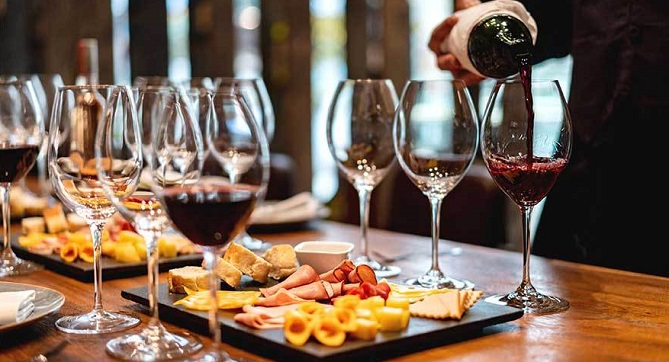
This intermediate course builds upon the students' introductory knowledge and skill of wine through applying greater depth and critical thinking skills as it relates to sensory analysis, wine and advanced food pairing, sparkling and fortified wine while being immersed into the most significant wine producing locations.This course explores the New World and Old World wine regions by looking at the impact of geological events, the importance of topographical markers and the influence of climatic factors and vinification techniques on the grapes and ultimately the wine in the glass. This class is designed for those who have successfully fulfilled all requirements from the Wine Professional (WP) Wine Apprentice Level I.
Course Outcomes
This is a nine-week course that consists of 45 total hours of hands-on instruction and assessment. Upon successful completion of the requirements in this course, the trainees will be awarded the Wine Professional (WP) Program: Intermediate Level II - Wine Steward Certification.
Learning Outcomes
- Sensory Analysis—Demonstrate advanced systematic technique for the sensory evaluation of wine
- Food Pairing—Describe and demonstrate advanced principles of the Analytical Wine and Food Pairing Approach
- New World—Summarize the geographic, geological, and climatic attributes regarding the major New World wine producing areas (California, Washington, Oregon, New Zealand, Australia, Chili, Argentina and South Africa) and their influence on corresponding grape varietals
- Old World—Summarize the geographic, geological, and climatic attributes regarding the major Old World wine producing areas (France, Italy, Spain and Germany) and their influence on corresponding grape varietals
- Sparkling Wine—Explain production methods and styles of sparkling wine
- Fortified Wine—Explain production methods and styles of fortified wine
- Service—Demonstrate professional beverage service that includes proper table-side service of sparkling wine.
Advanced Level III -- Sommelier
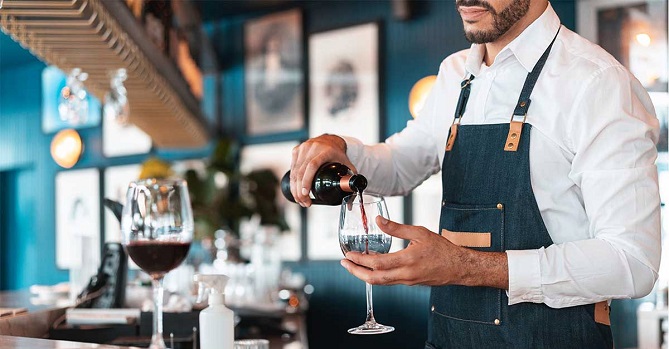
This advanced course is an intensive study that builds upon the students' introductory and intermediate wine knowledge and skill through applying greater depth and critical thinking skills as it relates to the significant New and Old World wine producing locations, sensory analysis, and traditional cuisines and ingredients of famous wine regions, along with immersion into other beverages (beer, spirits, cider and sake). Professional wine service (decanting, still wine and sparkling wine) will also be emphasized along with performing detailed table-side recommendations. The student will also gain critical information in procuring, purchasing, receiving, storing and promoting beverages. Additionally, they will create a restaurant/wine bar concept along with both food and beverage menu(s) that support the target market and location.
Course Outcomes
This is a 26-week course that consists of 130 total hours of hands-on instruction and assessment. Upon successful completion of the requirements in this course, the trainees will be awarded the Wine Professional (WP) Program: Intermediate Level III – Sommelier Certification.
Learning Outcomes
- Sensory Analysis—Demonstrate advanced systematic technique for the sensory evaluation of wine and other beverages.
- Food Pairing—Recognize and evaluate classical cuisines and ingredients of famous New and Old World wine producing regions.
- New World—Explain the geographic, geological, and climatic attributes regarding the major New World wine producing areas (California, Washinton, Oregon, New Zealand, Australia, Chile, Argentina and South Africa) and their influence on corresponding grape varietals.
- Old World—Explain the geographic, geological, and climatic attributes regarding the major Old World wine producing areas (France, Italy, Spain, Germany, Portugal, Austria, Hungary, Greece) and their influence on corresponding grape varietals.
- Service—Demonstrate professional beverage service that includes advanced and polished proper opening of sparkling wine and decanting red wine as well as detailed table-side recommendations and justification of restaurant/wine bar concept.
- Restaurant/Wine Bar—Create a concept along with corresponding food and beverage menu(s) that support the target market and location.
- Beer—Distinguish the major differences between ales and lagers categories of beers along with a selection of their most famous styles
- Spirits and Mixology—Recognize the significant distinctions between the basic types of spirits and their derivatives and a selection of classic cocktails.
- Sake and Cider—Comprehend the essentials of sake and cider.
- Cheese and Charcuterie—Identify the categories of cheese and types of charcuterie and recognize suitable wine pairings.
Please email any questions to: taste@nl.edu
Register Online
To find upcoming Dates/Costs/Registration, please click the link below: